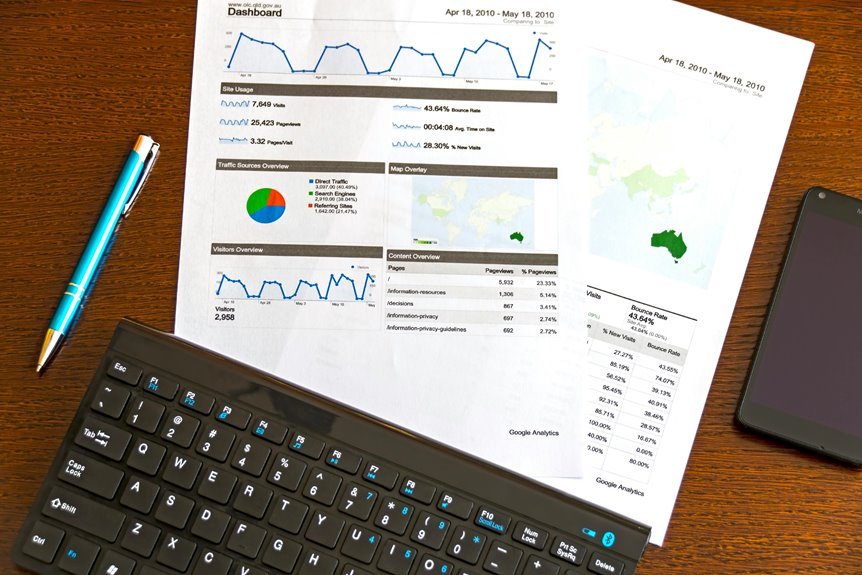
Financial Performance Dashboard: 101023442, 101030500, 101040500, 104439950, 105517881, 107502735

The financial performance dashboard for accounts 101023442, 101030500, 101040500, 104439950, 105517881, and 107502735 serves as a critical tool for evaluating organizational health. It aggregates essential metrics, enabling stakeholders to identify trends and areas for improvement. By visualizing performance indicators, decision-makers can better strategize resource allocation. However, the nuances of these metrics raise questions about their implications for future growth and sustainability. What insights could emerge from a deeper analysis?
Understanding Financial Performance Metrics
Financial performance metrics serve as critical indicators for assessing an organization’s economic health and operational efficiency.
Key financial ratios, such as return on equity and profit margins, help evaluate profitability and resource utilization. Additionally, monitoring revenue growth provides insights into market demand and company expansion.
Together, these metrics facilitate informed decision-making, empowering stakeholders to pursue strategic initiatives that enhance financial sustainability and operational freedom.
The Role of Financial Performance Dashboards
While organizations strive to enhance their financial performance, dashboards emerge as essential tools for visualizing and interpreting complex data.
These dashboards facilitate performance visualization, enabling stakeholders to quickly assess financial health and identify trends.
Furthermore, their effectiveness lies in consolidating key metrics, thus fostering informed decision-making.
Ultimately, financial performance dashboards empower organizations to pursue growth while maintaining a clear view of their fiscal landscape.
Analyzing Key Identifiers for Strategic Insights
Key identifiers play a crucial role in transforming raw financial data into actionable strategic insights.
Through identifier analysis, organizations can pinpoint trends, assess performance, and identify opportunities for improvement. This analytical approach provides a framework for decision-making, allowing stakeholders to navigate complexities and optimize resources effectively.
Ultimately, strategic insights derived from key identifiers empower businesses to enhance their financial health and operational efficiency.
Conclusion
In conclusion, the financial performance dashboard serves as a vital tool for stakeholders to gauge economic health and identify improvement opportunities across accounts 101023442, 101030500, 101040500, 104439950, 105517881, and 107502735. As the adage goes, “What gets measured gets managed,” emphasizing the importance of these metrics in guiding strategic decision-making. By leveraging data visualization, organizations can enhance resource optimization and drive sustainable growth in an ever-evolving market landscape.